POS Advantages and Disadvantages

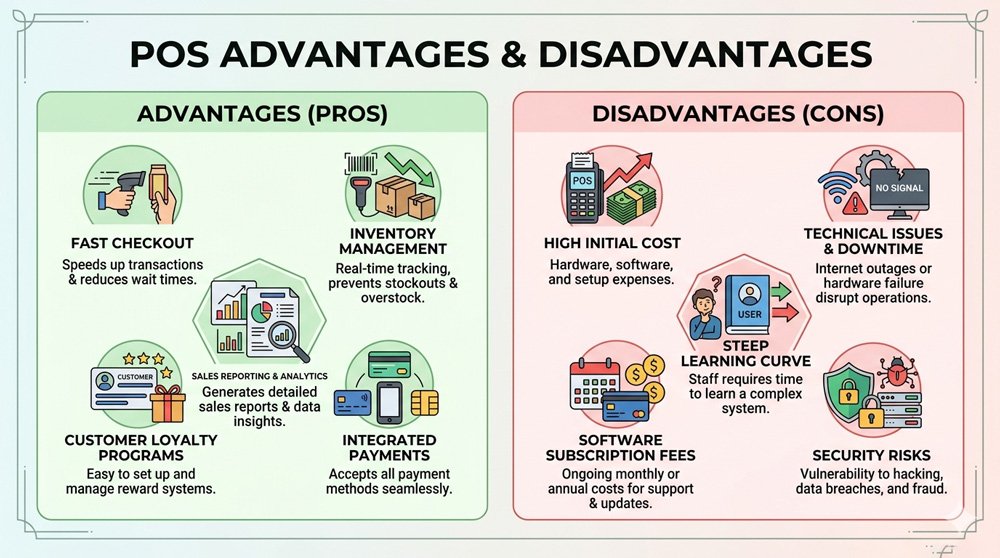
If you’re running a retail business, investing in a POS (Point of Sale) system can be a game-changer—but only if you understand both its benefits and limitations.
Here’s a clear and practical breakdown to help you decide 👇
✅ Advantages of POS Software
1. Faster Billing & Checkout
POS systems speed up the checkout process with barcode scanning and instant invoicing.
👉 Result: Shorter queues, better customer experience, and more sales.
2. Real-Time Inventory Management
Every sale automatically updates your inventory.
👉 You always know what’s in stock and avoid overstocking or stockouts.
3. Accurate Sales & Financial Reports
POS software provides detailed insights like:
- Daily and monthly sales
- Profit and loss
- Best-selling products
👉 Helps you make informed, data-driven decisions.
4. Reduced Human Errors
Manual calculations often lead to mistakes.
POS systems:
- Automate pricing and totals
- Maintain accurate records
👉 Reduces financial loss and improves reliability.
5. Multi-Store Management
If you run multiple outlets:
- Manage all locations from one system
- Monitor the performance of each store
👉 Simplifies operations as your business grows.
6. Customer Management & Loyalty
POS software stores customer data and purchase history.
👉 You can offer:
- Discounts
- Loyalty programs
- Personalized promotions
7. Time-Saving Automation
POS automates key tasks:
- Billing
- Inventory updates
- Reporting
👉 Saves time and improves efficiency.
8. Secure Data Storage
Cloud-based POS systems offer:
- Data security
- Automatic backups
- Remote access
👉 Your business data stays safe and accessible anytime.
9. Employee Monitoring
Track staff performance easily:
- Sales by employee
- Activity logs
👉 Improves accountability and reduces internal issues.
10. Scalable for Business Growth
As your business expands, POS systems grow with you:
- Add more products
- Open new branches
- Handle higher sales volume
👉 No need to change systems later.
❌ Disadvantages of POS Software
1. Initial Setup Cost
Some systems require:
- Hardware (scanner, printer, etc.)
- Installation costs
👉 However, cloud-based POS solutions reduce upfront investment.
2. Internet Dependency
Cloud POS systems rely on internet connectivity.
👉 Slow or unstable internet can temporarily affect operations (offline mode can help).
3. Learning Curve
Staff may need time to learn the system.
👉 Modern POS software is usually user-friendly, so training is minimal.
4. Ongoing Subscription Cost
Many POS systems charge monthly or yearly fees.
👉 But the efficiency and increased sales often outweigh the cost.
5. System Downtime Risk
Technical issues or server downtime can interrupt business.
👉 Choosing a reliable provider minimizes this risk.
6. Data Security Risks (If Not Properly Managed)
Using low-quality or unsecured systems can expose your data.
👉 Always choose a trusted and secure POS provider.
⚖️ Final Verdict
👍 POS Software is Ideal If:
- You want better control over your business
- You need accurate reports and inventory tracking
- You plan to grow or expand
👎 Challenges Occur If:
- You chose the wrong system
- You don’t train your staff properly
The advantages of POS software clearly outweigh the disadvantages.
In today’s competitive retail environment, not using a POS system can limit your growth and efficiency.
👉 The real question is not “Do you need a POS system?”
👉 It’s “Which POS system is best for your business?”