Inventory Management Process in Retail: A Complete Guide

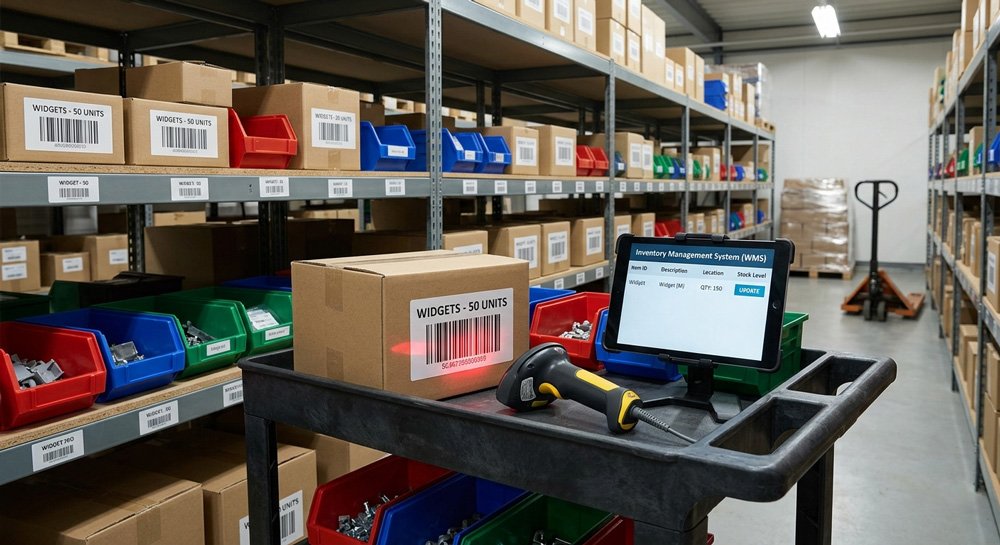
In today’s competitive retail landscape, managing stock efficiently is not just an operational task—it’s a strategic advantage. Whether you run a small shop or a multi-store retail chain, a well-structured inventory management process ensures smooth operations, better customer satisfaction, and higher profitability.
In this guide, we’ll explore everything you need to know about inventory management in retail, from fundamentals to advanced strategies.
What is Inventory Management in Retail Business?
Inventory management in retail refers to the process of ordering, storing, tracking, and controlling stock. It includes raw materials (if applicable), finished goods, and everything in between that a business sells.
The goal is simple:
Have the right product, in the right quantity, at the right time.
Retailers must balance supply and demand carefully. Too much inventory leads to increased holding costs, while too little results in stockouts and lost sales.
Why Inventory Management Is Important in Retail Business
Effective inventory management is crucial for several reasons:
1. Prevents Stockouts and Overstocking
Poor inventory control can lead to empty shelves or excess stock. Both situations harm your business—either through lost revenue or increased costs.
2. Improves Cash Flow
Inventory ties up capital. Efficient management ensures that your money is not locked in unsold products.
3. Enhances Customer Satisfaction
Customers expect products to be available when they need them. Proper inventory ensures consistent availability.
4. Reduces Operational Costs
Better inventory control minimizes storage, insurance, and spoilage costs.
5. Enables Data-Driven Decisions
Tracking inventory provides insights into sales trends, helping you make smarter purchasing decisions.
Types of Inventory Management Systems in Retail
Retail businesses use different types of inventory systems depending on their size and complexity.
1. Manual Inventory System
This involves spreadsheets or handwritten records. Suitable for very small businesses but prone to human error.
2. Periodic Inventory System
Stock levels are updated at specific intervals (weekly, monthly). It’s simple but not real-time.
3. Perpetual Inventory System
This system updates inventory in real-time using POS systems and barcode scanners. It’s highly accurate and widely used in modern retail.
4. Cloud-Based Inventory System
Accessible from anywhere, cloud systems allow multi-store management and real-time synchronization.
Common Inventory Management Methods Used in Retail
Retailers apply various methods to manage stock efficiently:
1. FIFO (First In, First Out)
Old stock is sold first. Ideal for perishable goods and fast-moving items.
2. LIFO (Last In, First Out)
New stock is sold first. Less common in retail but used in certain industries.
3. ABC Analysis
Products are categorized based on value and importance:
- A: High value, low quantity
- B: Moderate value
- C: Low value, high quantity
4. Just-In-Time (JIT)
Inventory is ordered only when needed, reducing holding costs but requiring precise demand forecasting.
5. Safety Stock
Extra inventory kept as a buffer against demand fluctuations.
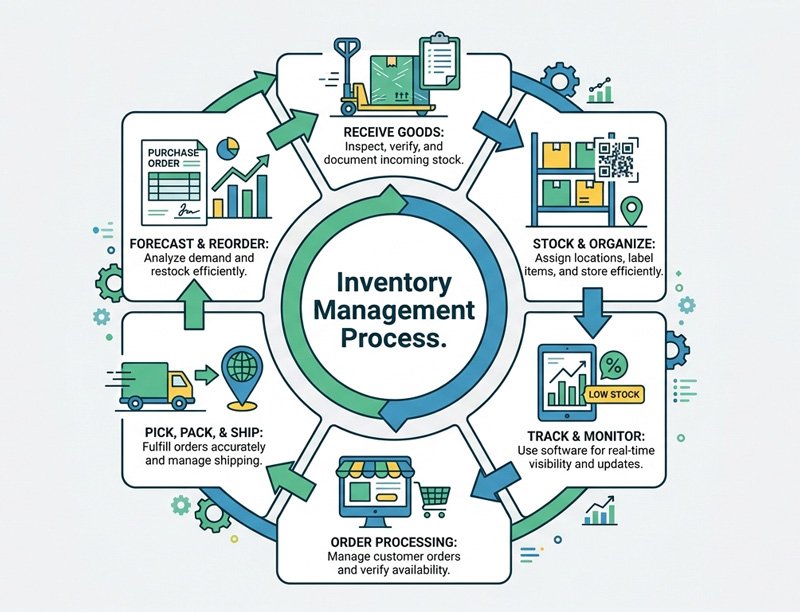
Inventory Management Process in Retail Business
A structured inventory management process includes several key steps:
1. Demand Forecasting
Analyze past sales data to predict future demand.
2. Inventory Planning
Decide how much stock to order based on forecasts.
3. Purchasing
Order products from suppliers at the right time and cost.
4. Receiving Inventory
Inspect and verify incoming goods for quality and quantity.
5. Storage and Organization
Store items efficiently using proper labeling and categorization.
6. Inventory Tracking
Monitor stock levels using barcodes, RFID, or POS systems.
7. Order Fulfillment
Pick, pack, and deliver products to customers.
8. Stock Replenishment
Restock items before they run out based on reorder levels.
9. Reporting and Analysis
Review reports to identify trends, slow-moving items, and opportunities.
Key Challenges of Inventory Management in Retail
Retailers often face several challenges:
1. Demand Fluctuations
Seasonal changes and trends can make forecasting difficult.
2. Overstocking and Dead Stock
Unsold products take up space and reduce profitability.
3. Stockouts
Running out of popular items leads to lost sales and unhappy customers.
4. Shrinkage
Losses due to theft, damage, or errors.
5. Multi-Channel Complexity
Managing inventory across physical stores, eCommerce, and marketplaces can be challenging.
Best Practices for Inventory Management in Retail
To optimize your inventory management process, follow these best practices:
1. Use Real-Time Inventory Tracking
Implement systems that update stock levels instantly.
2. Automate Reordering
Set reorder points to avoid manual errors.
3. Conduct Regular Audits
Perform cycle counts and physical stock checks.
4. Optimize Storage Layout
Organize your warehouse for faster picking and reduced errors.
5. Analyze Sales Data
Use data insights to adjust inventory levels and improve forecasting.
6. Manage Supplier Relationships
Reliable suppliers ensure timely delivery and better pricing.
Role of Technology in Retail Inventory Management
Technology plays a crucial role in modern inventory management:
- POS Systems: Automatically update stock with every sale
- Barcode Scanning: Reduces manual errors and speeds up processes
- Cloud Software: Enables remote access and multi-location management
- AI & Analytics: Improves demand forecasting and decision-making
- Integration Tools: Sync inventory across eCommerce platforms and marketplaces
Retailers who adopt technology gain better control, accuracy, and efficiency.
Benefits of Inventory Management Software for Retailers
Using inventory management software offers multiple advantages:
1. Real-Time Visibility
Know exactly what’s in stock at any time.
2. Increased Accuracy
Minimize human errors with automation.
3. Time Savings
Automated processes reduce manual workload.
4. Better Decision Making
Access detailed reports and analytics.
5. Multi-Store Management
Manage multiple outlets from a single dashboard.
6. Improved Customer Experience
Ensure product availability and faster order fulfillment.
How to Choose the Right Inventory Management System
Selecting the right system is critical for your business success. Here’s what to consider:
1. Business Size and Needs
Choose a solution that fits your current scale and future growth.
2. Ease of Use
A user-friendly interface ensures faster adoption by your team.
3. Integration Capabilities
Ensure it integrates with your POS, accounting, and eCommerce platforms.
4. Real-Time Tracking
Look for systems that offer live inventory updates.
5. Reporting Features
Advanced analytics help you make better decisions.
6. Scalability
Your system should grow with your business.
7. Cost and ROI
Evaluate pricing based on features and long-term benefits.
A well-defined inventory management process is the backbone of any successful retail business. From reducing costs to improving customer satisfaction, efficient inventory control directly impacts your bottom line.
As retail becomes more competitive and data-driven, investing in the right inventory management system is no longer optional—it’s essential. By adopting modern tools, best practices, and smart strategies, retailers can streamline operations, boost profitability, and stay ahead of the competition.
If you’re looking to simplify your retail operations, implementing a powerful inventory management solution like GPOS System can help you automate processes, gain real-time insights, and scale your business with confidence.